
 Shop Merch
How to Apologize to Your Kids When You Lose Your Temper
You lost your temper with your kids. Here is how to apologize in plain words, ask for forgiveness and begin rebuilding trust with your son or daughter.
By Isaac Bennett8 min read
In short
The answer first
You lost your temper with your kids. Here is how to apologize in plain words, ask for forgiveness and begin rebuilding trust with your son or daughter.
On this page
It happened again. A glass got knocked over, your son talked back, and you let him have it. Your voice came out louder than you wanted, and the words were worse. Now the house is quiet, his door is shut, and you're standing in the hallway with no idea what to do.
If that's you tonight, you're not the first dad to stand there. There's a way forward, and it starts with one hard conversation. Here's how to have it.
Why Your Child Remembers How You Handled the Moment
Every father loses his temper sometimes. Your kids already know you're not perfect. What they're still deciding is whether you're safe. Can a man be wrong and still be good?
Take a boy who gets yelled at for leaving his bike in the driveway. The yelling stings, but it fades. What he carries for years is what came after. Maybe Dad never mentioned it, and the air stayed heavy. Or maybe Dad came to his room and said, "I was wrong to blow up like that." Those two boys walk away with very different lessons.
Say nothing and your child writes his own story to fill the silence. Kids often decide the anger was their fault. Or they decide love can switch off without warning. An honest apology tells a truer story. The anger was yours. He matters more than your pride. Home is a place where wrongs get made right.
That's why the repair matters more than the blowup. You can't take back what you said. You can choose what happens next.
What Scripture Says About Anger and Fatherhood
The Bible doesn't pretend dads never get angry. Paul writes, "Be angry and do not sin; do not let the sun go down on your anger" (Ephesians 4:26, ESV). Feeling anger isn't the problem. What we do with it is.
Scripture speaks to fathers directly, too. "Fathers, do not provoke your children to anger, but bring them up in the discipline and instruction of the Lord" (Ephesians 6:4, ESV). You can read the whole chapter at Ephesians 6 on esv.org. Colossians 3:21 adds, "Fathers, do not provoke your children, lest they become discouraged" (ESV). A discouraged child stops trying. He stops talking.
James gives us a rule for the heat of the moment: "Let every person be quick to hear, slow to speak, slow to anger; for the anger of man does not produce the righteousness of God" (James 1:19 and 20, ESV). Read that last part again. No matter how justified your anger feels, it won't produce the child you're hoping for.
Proverbs 15:1 puts it plainly: "A soft answer turns away wrath, but a harsh word stirs up anger" (ESV). Teenagers especially hand back whatever we give them.
Now the good news. When you've blown it, God hasn't left you without a road home. "If we confess our sins, he is faithful and just to forgive us our sins and to cleanse us from all unrighteousness" (1 John 1:9, ESV). Go to God first. Then go to your child, from a place of forgiveness instead of panic.
Five Steps to a Sincere Apology That Kids Understand
Kids can tell a real apology from a fake one in about three seconds. This pattern works at any age.
- Cool down and pray first. Don't apologize while you're still hot. Take a few minutes and tell God plainly what you did. Ask Him for humility and the right words. An apology blurted out mid argument usually just becomes another argument.
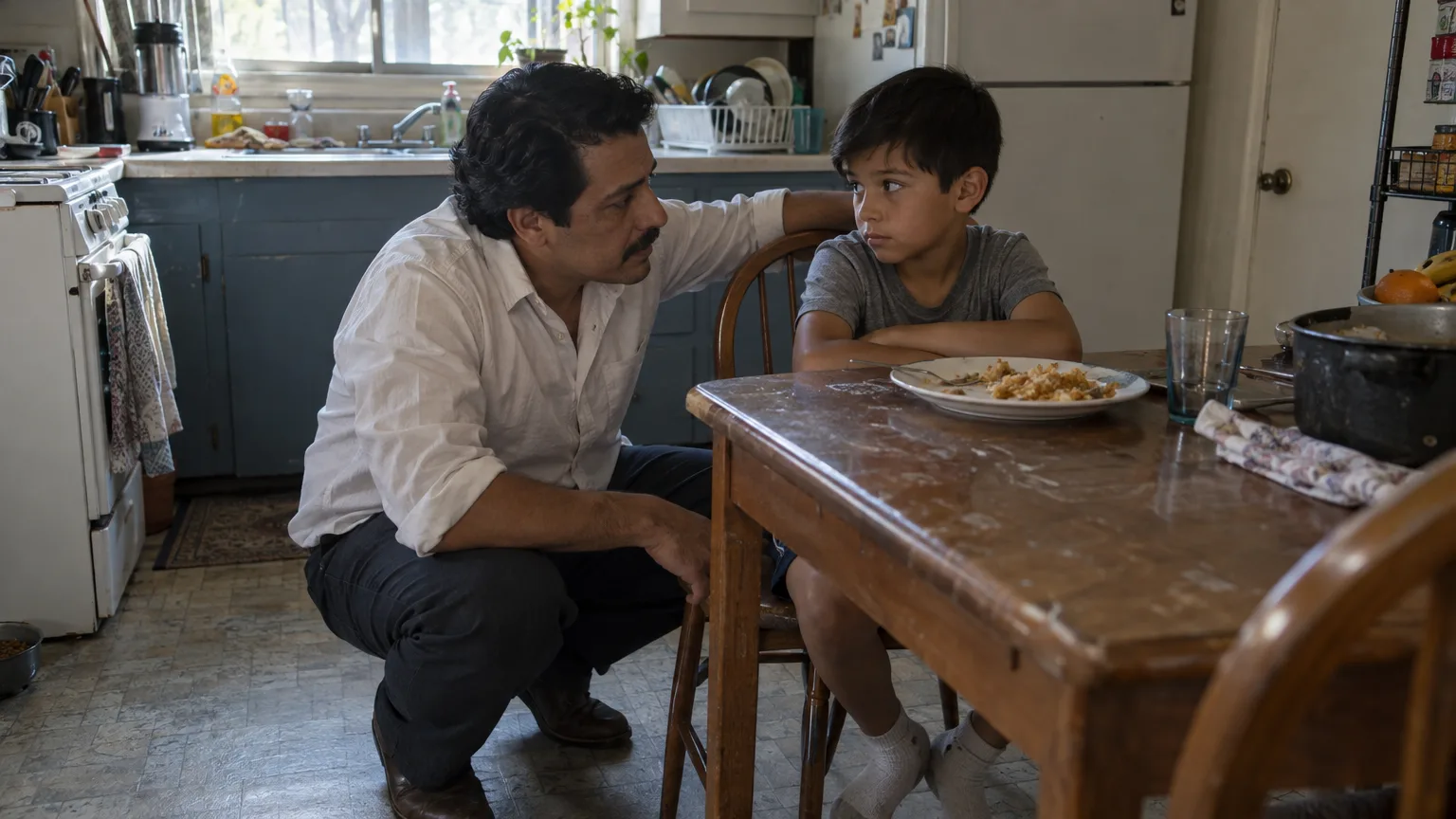
- Choose a calm moment and go to him. Don't wait for him to come to you. Knock on his door and sit on the edge of the bed. Or ask him to ride along while you grab food. Younger kids need you at their eye level. Teenagers often talk best side by side, not face to face.
- Name exactly what you did. Be specific. "I'm sorry I got upset" is too vague. Say what happened: "I yelled, and I called you lazy." Name it, and he knows you really see it.
- Say you were wrong and ask for forgiveness. Keep it short. "I was wrong. I'm sorry. Will you forgive me?" Then stop talking. Let him answer, or not answer.
- Say what you'll do differently, then do it. "Next time I feel myself getting angry, I'm going to step outside for a few minutes before I talk." And then actually do that. Over time, your changed behavior is the loudest part of your apology.
Here's how it might sound with a teenager. Picture a dad who stops at his son's door the next evening.
"Hey, got a minute? I want to talk about last night. I yelled at you, and I called you lazy. That was wrong. You're not lazy, and I said it because I was angry. I'm sorry. Will you forgive me?"
The boy shrugs. "It's fine."
"I appreciate that. But it wasn't fine to me. You don't have to say anything else. I just wanted you to know I'm working on it, and I love you."
Look at what the dad didn't do. He didn't argue about the homework that started it. He didn't push for a big emotional moment. He said the true thing, left the door open, and walked out. Sometimes the real reply comes three days later, in a text or a question at the dinner table.
With a younger child, it can be even shorter. "I yelled at you, and that scared you. That was wrong. I'm sorry. I love you. Can I have a hug?"
What to Avoid Saying When You Make Things Right
A few small words can wreck a good apology. Watch for these.
- "I'm sorry you feel that way." This pins the problem on his feelings instead of on what you did.
- "I'm sorry, but you..." Everything before that "but" gets erased. Deal with his behavior another day.
- "I was just tired" or "I had a bad day at work." Explaining can sound like excusing. If he asks, you can tell him later. Lead with ownership.
- "Let's just forget about it." Kids don't forget. They just stop trusting that you'll fix things.
- "You need to forgive me because the Bible says so." Never use Scripture to demand something. Forgiveness freely given is real. Forgiveness forced out of a child isn't.
- A long speech. Once your apology runs past a minute or two, it's probably turning into something about you.
- Gifts or treats in place of words. A milkshake is nice. It doesn't replace "I was wrong."
The opposite ditch is just as real. Some dads apologize and then spend two days beating themselves up in front of the kids. Now your child feels he has to comfort you. You're not trying to prove how guilty you feel. You're trying to make things right and then change. If shame keeps telling you you're a terrible father, our article on what to do when shame tells you that you are not enough may help.
One more thing, said with care. Maybe your anger frightens your family. Maybe you've ever hit or shoved someone in your home, or you're afraid of what you might do. Then an apology alone isn't enough. Please talk to your pastor and a licensed professional soon. If anyone is in danger or in crisis, in the United States call or text 988. Asking for help is a mark of strength, and it protects the people you love. Focus on the Family also offers parenting resources, though they're no substitute for help in person.
Turning Your Worst Moments Into Lessons About Grace
Here's something that may surprise you. Your child doesn't need a dad who never fails. He needs a dad who shows him what to do when he does.
Think about what your apology teaches. A strong man can say "I was wrong." And real repentance has a shape: you name what you did and own it. Then you ask forgiveness and actually change. Someday your son will wrong his wife or his own child. He'll remember how his father handled it.
It also gives him a picture of the Father in heaven. "As a father shows compassion to his children, so the Lord shows compassion to those who fear him" (Psalm 103:13, ESV). When you kneel down and say sorry, you're showing your kids something about how God draws near to us when we fail. You can read more about that kind of grace in the resources at The Gospel Coalition.
Do a few more things this week:
- Pray for your child by name, and ask God to heal what your anger bruised. If you've never prayed with your kids, our article on praying with your children without it feeling awkward is a gentle place to start.
- Pick one trigger you know is coming, like homework hour or the morning rush, and plan how you'll stay calm.
- Tell a trusted brother. Anger grows in the dark. Ask him to check in on you.
- Open the Word together. If you're not sure where to start, Open the Bible Playbook.
- Say "I love you" on an ordinary day, not only after a fight. Trust gets rebuilt in small moments.
Repairing things with your son or daughter takes time. You may do everything right and still get a cold shoulder for a while. Keep showing up. Keep your word. And be the man who says sorry quickly and means it.
Want to grow as a father alongside other men working on the same things? You don't have to do it alone. Launching Pad is a free, two day, in person event for Christian men, led by Super Bowl champion Steve Weatherford. Seats are limited. Find your Launching Pad and bring your questions.
Tonight, go knock on that door.
Good questions
Should I apologize to my kids even if they were disrespectful first?
Yes. Apologize for your part, which is how you responded. You can still deal with their behavior later, once things are calm. Your apology does not excuse what they did. It shows them how a grown man owns what is his.
What if my teenager shrugs it off or refuses to forgive me?
Do not demand forgiveness. Say what you needed to say, tell him you are not going anywhere and give him time. Trust grows back slowly, so keep showing up, keep your word and let your changed behavior do the talking.
How do I stop losing my temper in the first place?
Learn your warning signs, like a tight jaw or a rising voice, and step away before you speak. Pray, ask God for help and tell a trusted brother or your pastor so someone can walk with you. If your anger frightens your family or has ever led you to hurt someone, talk to your pastor and a licensed professional, and if anyone is in crisis in the United States, call or text 988.
Sources
Take the next step
Lead your home with an open Bible
Your children learn what a father believes by watching what he does. Open the Bible Playbook and start this week.
Read next
 Fatherhood
What Your Kids Need Most From You as Their Father
Your kids do not need a perfect dad. They need a present one who shows affection, disciplines with care and lets them see his faith. Fatherhood
How to Pray With Your Children Without It Feeling Awkward
Praying with your kids does not need big words or long speeches. Start with one minute, a simple pattern and a steady habit. Faith and Identity
What to Do When Shame Tells You That You Are Not Enough
Shame says you are the failure, not just that you failed. See what Scripture says about your worth and take simple steps to loosen shame's grip.