
 Shop Merch
How to Raise a Son Who Knows What Real Manhood Looks Like
Your son learns manhood by watching you. See what Scripture says about real strength and simple ways to model it and talk with him this week.
By Jonathan Pierce8 min read
In short
The answer first
Your son learns manhood by watching you. See what Scripture says about real strength and simple ways to model it and talk with him this week.
On this page
It's Saturday morning and you're under the hood of the truck. Your son is standing next to you, handing you wrenches and not saying much. Then a bolt strips, and you let out a word you wish he hadn't heard. He doesn't say anything. But he saw it.
That's the real situation for most dads. You want your boy to grow into a man who loves Jesus, tells the truth and carries his weight. You also know you're the main picture of manhood he has. Here's what Scripture says about that, and what you can do this week.
Why Your Son Is Watching You More Than Listening to You
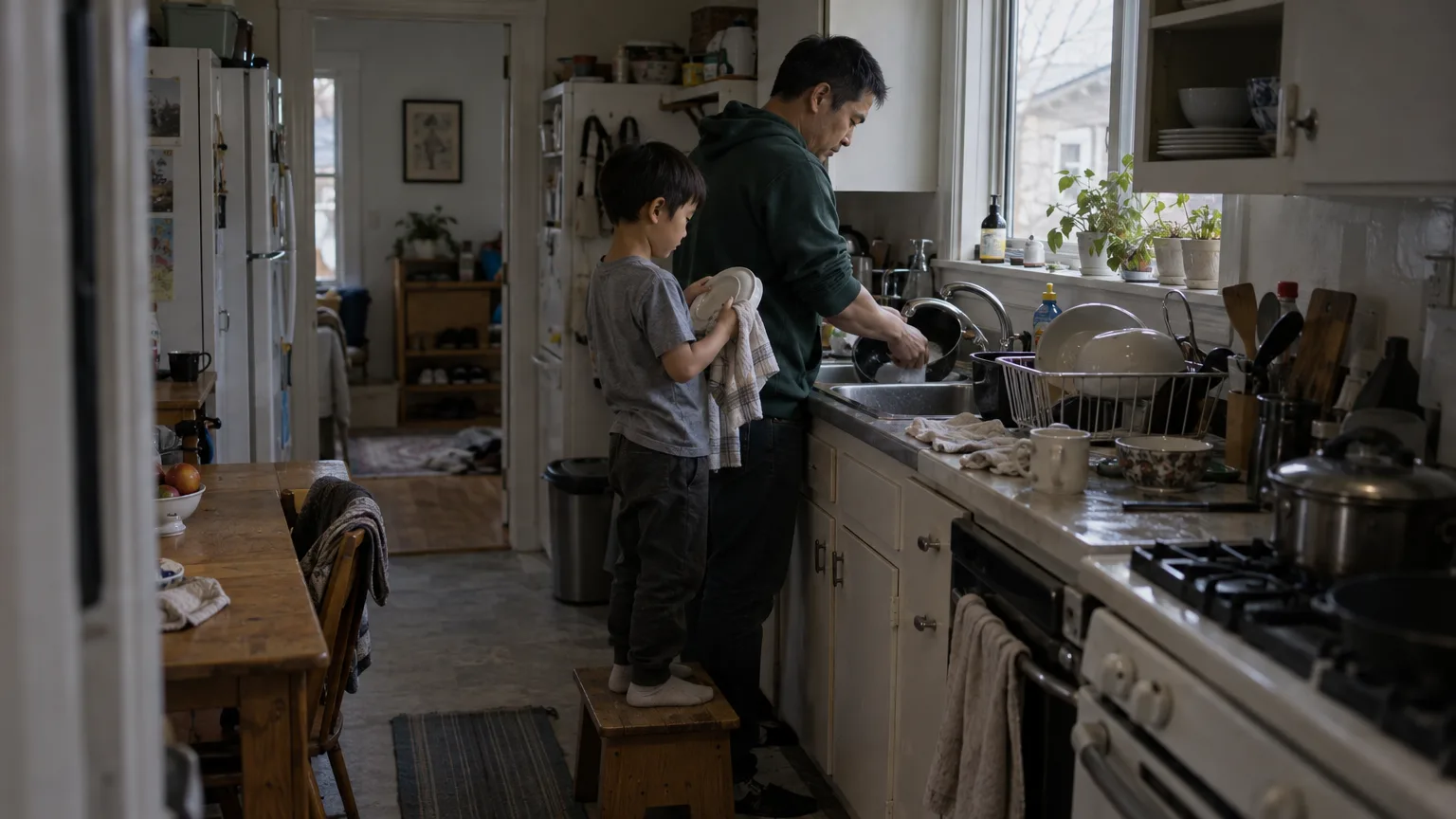
Boys pick up manhood the way they pick up a trade on a job site. They watch, they copy and they figure out what really matters by seeing what you do when the pressure's on.
God built this into the plan. When Moses told fathers to teach God's commands to their children, he didn't describe a classroom. He said to talk of them "when you sit in your house, and when you walk by the way" (Deuteronomy 6:7, ESV). That's the kitchen table and the drive to practice. The teaching happens in ordinary hours.
So your words matter, but they ride on top of your example. Picture a man who tells his son, "Always be honest." Then he sits in the driveway with the boy beside him and lies to a customer on the phone. The boy doesn't remember the speech. He remembers the phone call.
This isn't meant to crush you. Every father has stripped a bolt and said the wrong thing. It's meant to show you where your influence actually lives. Your son isn't mainly asking, "What does Dad say?" He's asking, "What does a man do?" If you want help thinking about what he needs most, we've written about what your kids need most from you as their father.
What the World Teaches Boys About Being a Man
While you're at work, other voices are talking to your son. Some of them are loud.
Here's what many boys hear, from screens, locker rooms and even some of the men around them:
- A real man never shows pain. Hurt gets buried, and anger is the only feeling allowed.
- A real man wins at any cost. Respect goes to the strongest and the richest.
- A real man takes what he wants. That includes attention, women and status.
- A real man needs nobody. Asking for help is weakness.
Some boys get the opposite message and grow up with a quiet, passive picture of manhood. The men they know never lead, never decide and never take a stand. Both pictures are false. One is all swagger and the other is all shrug.
Neither one has room for a man who is strong enough to be gentle. You don't need to scare your son about the culture. You just need to give him something better to compare it to, and you're the first sample he has. If you want more on how the world's pressure shapes a man, see our article on how to stop living for the approval of other men.
What Scripture Says Real Manhood Looks Like
God doesn't leave us guessing. Paul gives a short list: "Be watchful, stand firm in the faith, act like men, be strong. Let all that you do be done in love" (1 Corinthians 16:13, 14, ESV). Notice both halves. Strength and love belong together, and a man isn't asked to pick one.
Micah puts it this way: "He has told you, O man, what is good; and what does the Lord require of you but to do justice, and to love kindness, and to walk humbly with your God?" (Micah 6:8, ESV). That's a good sentence to hang on your son's wall. Do right, be kind and stay humble before God.
Then look at Jesus. He turned over tables in the temple, and He also washed His disciples' feet. He said the Son of Man "came not to be served but to serve, and to give his life as a ransom for many" (Mark 10:45, ESV). The strongest man who ever lived spent His strength on other people.
Integrity is part of this too. "Whoever walks in integrity walks securely" (Proverbs 10:9, ESV). A man whose private life matches his public one doesn't have to watch his back.
Finally, Paul speaks to dads directly: "Fathers, do not provoke your children to anger, but bring them up in the discipline and instruction of the Lord" (Ephesians 6:4, ESV). Your job is to lead him toward the Lord without crushing him on the way.
If you want a place to start studying these passages with your son, the Open the Bible Playbook is a good tool.
Everyday Ways to Model Strength, Humility, and Integrity
You don't need a new program. You need a few steady habits. Pick one or two.
- Let him work beside you. Fixing a fence, changing oil or cleaning the garage gives you time and conversation. Boys talk more when their hands are busy.
- Keep your word in small things. If you say you'll be at the game, be there. If you can't, tell him why and make it right. He learns what a man's yes means.
- Show strength as protection and service. Carry the heavy load, take the late shift and stand between your family and trouble. Let him see strength used for others, not to win an argument.
- Apologize when you're wrong. This is the hardest one and the most powerful. When you lose your temper, go to him and say, "I was wrong, and I'm sorry." Our article on how to apologize to your kids when you lose your temper walks through how.
- Treat his mother with honor. If you're married, how you speak to your wife is the loudest lesson he'll get on manhood. If you're not together, speak respectfully of her anyway.
- Be honest at work and with money. Don't brag about cutting corners. Let him hear you say, "We don't do it that way."
- Pray where he can see it. Pray at meals, pray in the truck, pray over him at night. The free Pray Like A Champion guide can help, and so can our article on how to pray with your children without it feeling awkward.
- Go to church and serve there. Don't drop him off. Walk in with him, sit next to him and let him see you worship.
None of this makes you perfect. It makes you present. Focus on the Family has practical resources for dads if you want more ideas.
How to Start Honest Conversations About Faith, Failure, and Responsibility
Most dads either lecture or stay quiet. Try something in the middle: short, honest talks that happen while you're doing something else.
Talk about faith like it's real. Tell him what you're reading, what you prayed about this week and where you're confused. Ask, "What do you think?" and then listen. A boy won't trust a faith that's all answers and no questions.
Talk about failure, including yours. Picture a father who tells his fourteen year old, "When I was your age I made a mess of something, and here's what I learned." The boy leans in. Confessing sin isn't weakness. It's what Scripture teaches: "If we confess our sins, he is faithful and just to forgive us our sins and to cleanse us from all unrighteousness" (1 John 1:9, ESV). Share what fits his age, and don't use your story to scare or shock him.
Talk about responsibility, and give him some. Boys grow when they carry something real. Give him chores that matter, a part of the family budget to understand, a task at church or a project he owns from start to finish. Let him fail at small things and help him sort out what went wrong. Don't take the job back.
Here are a few questions to try on a drive or over a meal:
- "What's the hardest thing at school right now?"
- "What do you think it means to be a man?"
- "Where did you see God this week?"
- "Is there anything you're afraid to tell me?"
Then stay calm when the answer is hard. If he risks honesty and you explode, he'll quit talking. Thank him for telling you, even when you're upset about what he said.
A word of care. If your son seems deeply sad or hopeless, is hiding something heavy, or you suspect abuse, addiction or self harm, don't try to handle it alone. Talk to your pastor and a licensed professional. If he is in crisis, call or text 988 in the United States, or visit the 988 Suicide and Crisis Lifeline.
What if you're reading this and feel like you've already blown it? Maybe you were absent, harsh or checked out for years. It isn't too late. "As a father shows compassion to his children, so the Lord shows compassion to those who fear him" (Psalm 103:13, ESV). Start with an honest sentence: "I haven't been the dad I want to be, and I'm going to do better." Then do the next small right thing. No honest man can promise how your son will respond. But a father who keeps showing up leaves a mark.
It also helps to have other dads in your corner. Find a Men's Prayer Group, which is free, weekly and local. And for solid teaching on family and faith, The Gospel Coalition has many articles worth your time.
If you want to take a bigger step with other men who are working on the same thing, Find your Launching Pad. It's a free, two day, in person event for Christian men, and seats are limited.
This week, pick one thing. Work on something together on Saturday, say one honest sentence about your own faith, or apologize for something you've been putting off. Your son is watching. Give him a man worth following.
Good questions
At what age should I start teaching my son about biblical manhood?
Start now, whatever his age. A small boy learns from how you treat his mother, keep your word and handle a bad day. As he grows, add words to what he already sees. Moses told fathers to talk about God's commands at home and on the road (Deuteronomy 6:7, ESV), which means daily life is the classroom.
What if I did not have a good father to learn from?
You are not disqualified. Many men are building something they never saw. Ask God to be the Father you needed (Psalm 103:13, ESV), find older men in your church who live out their faith, and admit your gaps to your son when it fits. Start small, stay consistent and let grace cover the rest.
What if my son is a teenager and seems to want nothing to do with me?
Stay steady and keep showing up. Teenagers pull away as part of growing up, but they still notice who is there. Offer time side by side, like a drive, a project or a meal, and listen more than you talk. If you are worried about depression, abuse, addiction or self harm, talk to your pastor and a licensed professional, and in the United States call or text 988 if he is in crisis.
Sources
Take the next step
Lead your home with an open Bible
Your children learn what a father believes by watching what he does. Open the Bible Playbook and start this week.
Read next
 Fatherhood
What Your Kids Need Most From You as Their Father
Your kids do not need a perfect dad. They need a present one who shows affection, disciplines with care and lets them see his faith.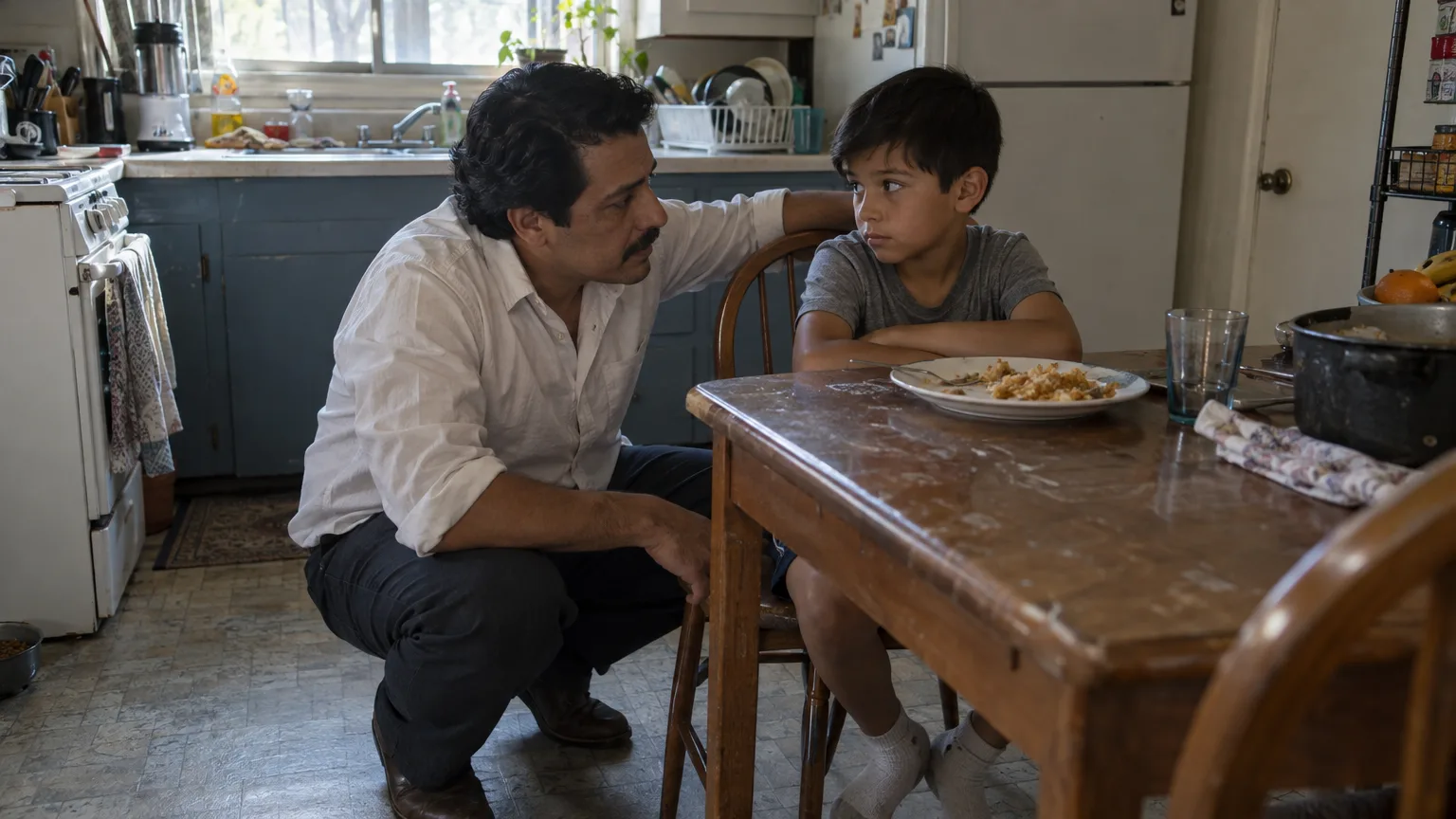 Fatherhood
How to Apologize to Your Kids When You Lose Your Temper
You lost your temper with your kids. Here is how to apologize in plain words, ask for forgiveness and begin rebuilding trust with your son or daughter.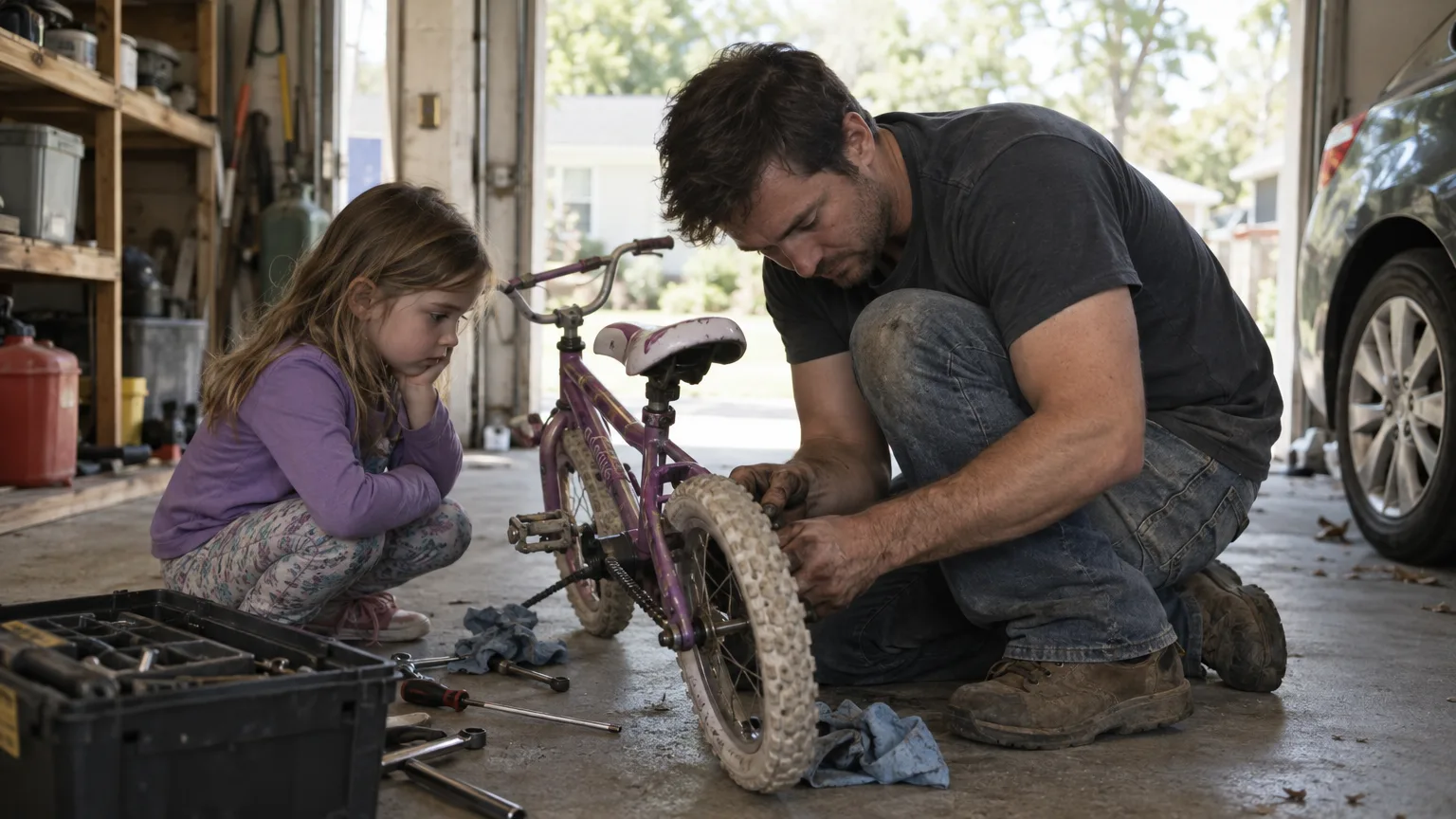 Fatherhood
How to Pray With Your Children Without It Feeling Awkward
Praying with your kids does not need big words or long speeches. Start with one minute, a simple pattern and a steady habit.